CA MAU - Disease outbreaks in farmed shrimp have always been a matter of concern for local residents, who proactively take preventive measures, as pathogens in shrimp can emerge due to dependence on various different factors.
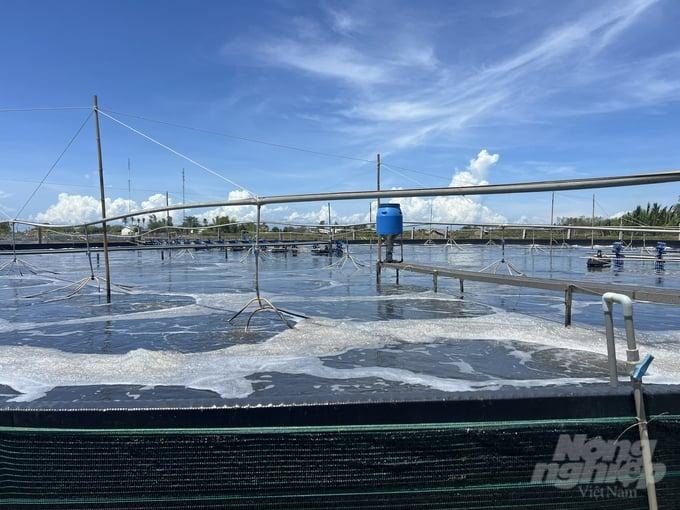
The shrimp pond of Mr. Vinh’s family in Ngoc Hien District. Photo: Trong Linh.
Ca Mau has numerous shrimp farming models that generate high economic value, such as extensive farming, improved extensive farming, intensive farming, and super-intensive farming. In addition to the advantages brought by Ca Mau’s shrimp products, shrimp farmers in the province face many challenges; beyond climate change, disease outbreaks in farmed shrimp also pose a significant threat.
With more than 30 years of experience in shrimp farming, including 10 years in high-tech shrimp farming, Mr. Nguyen Van Vinh of Ngoc Hien District stated: “For more than a year now, I have not made any profit from shrimp farming; at best, I break even. On the one hand, shrimp prices have declined compared to the years before the COVID-19 pandemic; on the other hand, inputs serving shrimp farming such as medicines, feed, and equipment have all increased in price, putting farmers in a difficult position. If we happen to fail in just one crop, we immediately fall into debt. Moreover, during the farming process, we must confront disease outbreaks, so there are many concerns to deal with.”
Regarding common shrimp diseases, Mr. Vinh said that there are currently many types of diseases affecting shrimp, but industrial shrimp farmers most frequently encounter white feces disease and the parasite Enterocytozoon hepatopenaei (EHP). These are the two most common diseases at present, mainly caused by adverse weather conditions and water sources carrying pathogens.
Based on his experience, Mr. Vinh assessed that when shrimp are infected with these two diseases, 90% of cases result in heavy losses, while the remaining 10% merely break even. Industrial shrimp farmers almost earn no profit when their shrimp are infected. “There is no way to save them; at best you break even, otherwise you lose several hundred million dong per pond. There is no standard benchmark to measure disease prevention,” Mr. Vinh said.
Meanwhile, Mr. Tran Van Khai, an industrial shrimp farmer in Ngoc Hien District, shared that since the beginning of the year he has struggled due to disease outbreaks. Every time he stocks post-larvae, they are infected with EHP or white feces disease, resulting only in losses or breaking even, making the situation extremely difficult.
“The weather is now unpredictable. This area is close to the sea and receives heavy rainfall, so farmed shrimp are very susceptible to disease due to weakened resistance. Pathogenic bacteria now evolve rapidly; when manufacturers release a new medicine, farmers use it for a short time and the bacteria quickly develop resistance. Therefore, we can only try to provide the best possible care, as there is no absolute preventive measure. Having good techniques and equipment does not guarantee 100% success; there are many other factors such as the environment, water sources, and weather,” Mr. Khai confided.
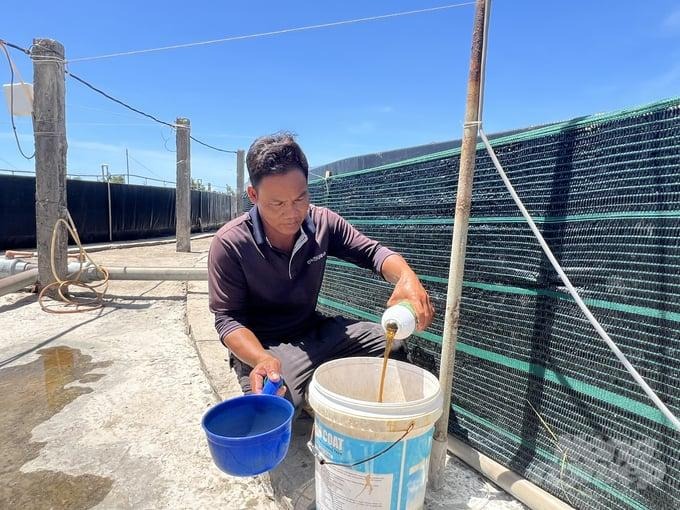
Shrimp farmers use biological products to mitigate environmental impacts. Photo: Trong Linh.
Mr. Dinh Hai Dang, an aquaculture engineer in Ca Mau Province, stated that extensive shrimp farming experiences very few diseases, as farmers typically only stock post-larvae and provide minimal care. Shrimp are raised at low stocking densities, so serious disease outbreaks are uncommon; the main issues are vitamin and mineral deficiencies. In contrast, high-tech industrial shrimp farming most commonly encounters white feces disease, hepatopancreatic necrosis, intestinal bacterial infections, fungal diseases, early mortality syndrome, black spot disease, and most recently, glass syndrome.
To prevent disease outbreaks, Mr. Dang recommended that farmers properly treat water quality and pond bottoms, and stock shrimp at moderate densities. “Seed quality is extremely important. To ensure favorable outcomes for each crop, farmers should select reputable seed suppliers; only healthy post-larvae will have strong resistance. In particular, the farming environment must be well treated and kept clean. Farmers should regularly monitor the growth progress of farmed shrimp in order to promptly detect diseases and address them at an early stage. Only by doing so can high efficiency be achieved in shrimp farming,” Mr. Dang stated.
Mr. Nguyen Thanh Tuan, an officer of the Agricultural and Fisheries Extension Station of Ngoc Hien District, noted that in recent times, industrial shrimp in the locality have frequently been affected by white feces disease and the intestinal parasite Enterocytozoon hepatopenaei (EHP). The signs of the disease include shrimp feces turning white, sticking to the shrimp’s tail or floating in the water. Once infected, the disease can only be prolonged but not completely cured. It does not cause mass mortality; however, over time the shrimp gradually become stunted. Infected shrimp may survive for three to four months as normal, but the stock will gradually decline each day.
According to Mr. Tuan, disease outbreaks are influenced by environmental factors that facilitate the formation of parasites in the water. Although farmers take proactive preventive measures, the effectiveness remains limited. “If shrimp are infected with white feces disease, farmers will incur losses, though at a relatively low level. In addition, the rainy months may cause various environmental issues in farming areas, affecting shrimp health and productivity,” Mr. Tuan shared.
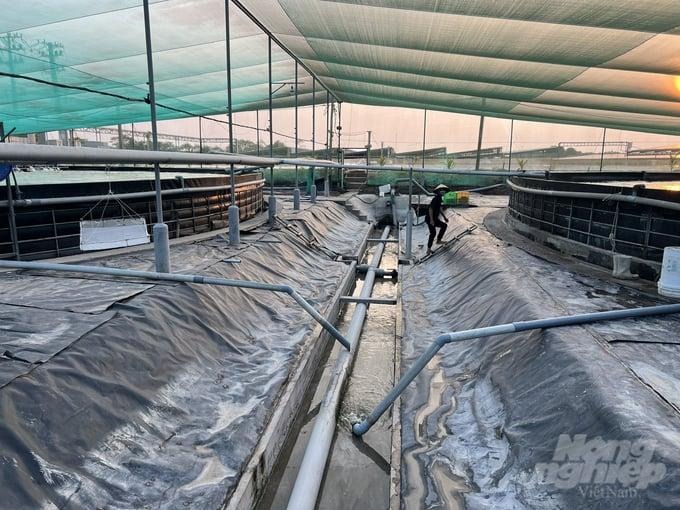
In addition, it is necessary to ensure that treatment systems operate safely and do not cause environmental pollution. Photo: Trong Linh.
According to the leadership of the Department of Agriculture and Rural Development of Ca Mau Province, heavy rainfall can reduce the salinity of water in shrimp ponds, causing shrimp to experience shock and become more susceptible to disease. Therefore, shrimp farmers must regularly monitor salinity, pH levels, and other key parameters to make timely adjustments. Modern water management systems should be used to promptly discharge excess rainwater or pump in seawater to maintain stable salinity levels.
In addition, rainwater may lower water temperature and alter the aquatic environment, affecting shrimp appetite and growth rates. Feed quantities should be adjusted appropriately to avoid overfeeding, which can lead to waste and pond pollution. Supplementing vitamin C and minerals is necessary to strengthen shrimp immunity and help them withstand weather fluctuations.
“Sudden environmental changes can make shrimp more vulnerable to bacterial and viral diseases. It is essential to regularly check shrimp health conditions and apply preventive measures such as using antibacterial agents and treating water with biological products,” the leadership of the Department of Agriculture and Rural Development of Ca Mau Province further informed.
Source: Shrimp Farmers Proactively Prevent Disease Outbreaks
Date of publication: November 15, 2024