TRA VINH: Although the initial investment costs are high, shrimp farmers are able to offset these expenses through cost savings, increased stocking density, and, in particular, the ability to control up to 90% of disease risks.
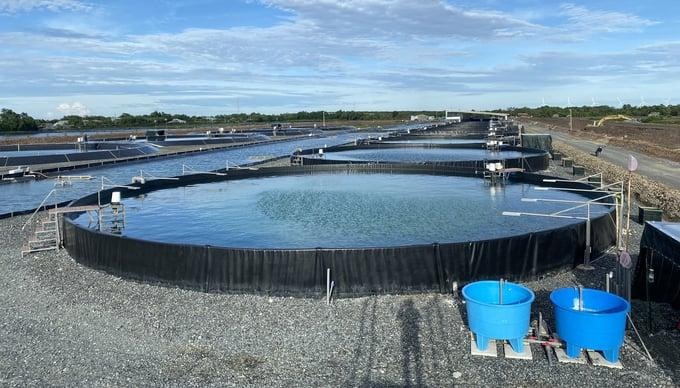
The Tomgoxy model of Rynan Technologies Vietnam Company in Tra Vinh. Photo: Ho Thao.
According to the Department of Animal Health (Ministry of Agriculture and Rural Development), during the first nine months of the year, the disease situation in shrimp farming has remained complex. Specifically, nationwide areas affected include white spot disease (1,034 hectares), acute hepatopancreatic necrosis disease (1,009 hectares), red body disease (643 hectares), white feces syndrome (565 hectares), while stunted growth and microsporidian infections are increasing rapidly.
These diseases are concentrated in key farming regions such as Tra Vinh, Soc Trang, Ca Mau, Bac Lieu, and Kien Giang, and are scattered across several other provinces. In particular, white spot disease is causing significant concern as there is currently no preventive vaccine and no effective treatment available.
Aquaculture researchers indicate that once shrimp become infected, the likelihood of successful treatment is very low. Therefore, the application of technology to control disease in shrimp farming has become an essential solution.
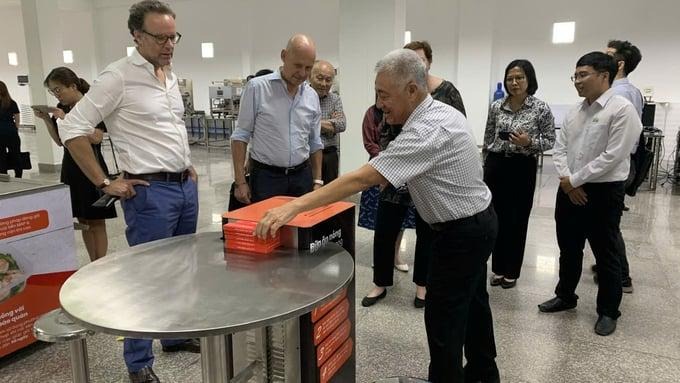
Dr. Nguyen Thanh My introduces the company’s equipment serving the shrimp industry to partners. Photo: Ho Thao.
Controlling 90% of Disease Outbreaks
Sharing his views on the current situation of diseases in farmed shrimp, Dr. Nguyen Thanh My, Chairman of the Board of Directors of My Lan Group, stated that, in addition to certain secondary causes, most farmers are currently operating in a manner that disrupts physical principles, inadvertently increasing the risk of disease outbreaks.
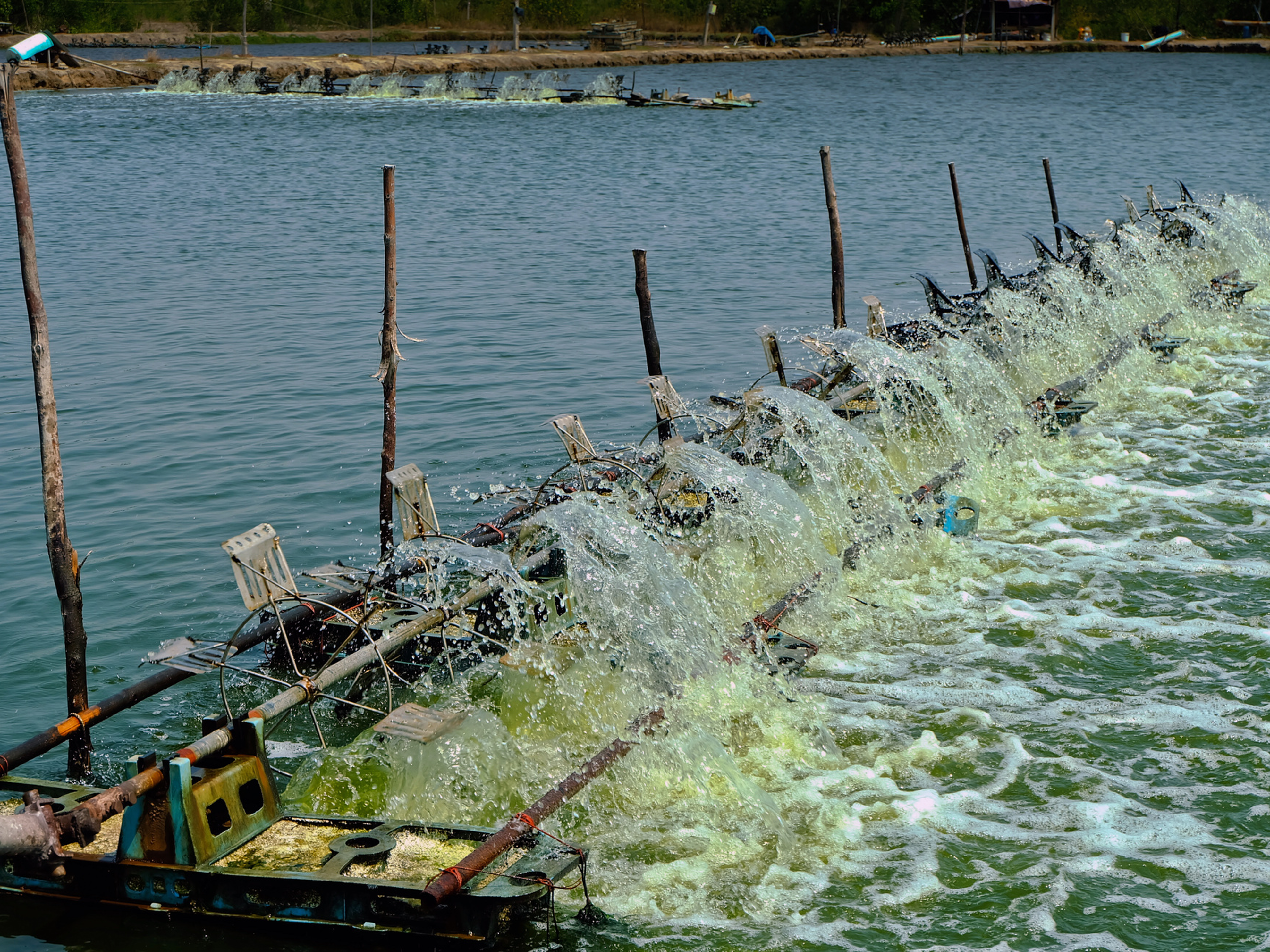
Most pond owners operate aeration systems continuously, 24 hours a day, to supply oxygen to shrimp, even though oxygen is naturally available. This practice not only wastes electricity but also increases costs and causes noise pollution in the surrounding area.
“The density of oxygen is 1.43 g/l, whereas in water it is only 1 g/l. Natural oxygen is already present at the bottom of the pond, so why use aerators to push oxygen upward?” Dr. My explained.
Dr. My pointed out several significant drawbacks of using aeration fans. First, when the fans operate, leftover feed is dispersed into the water, resulting in waste and making it difficult to remove organic waste. Second, aerators disperse fine particles into the air that may carry pathogens from one pond to another, while also spreading bacteria from the pond bottom.
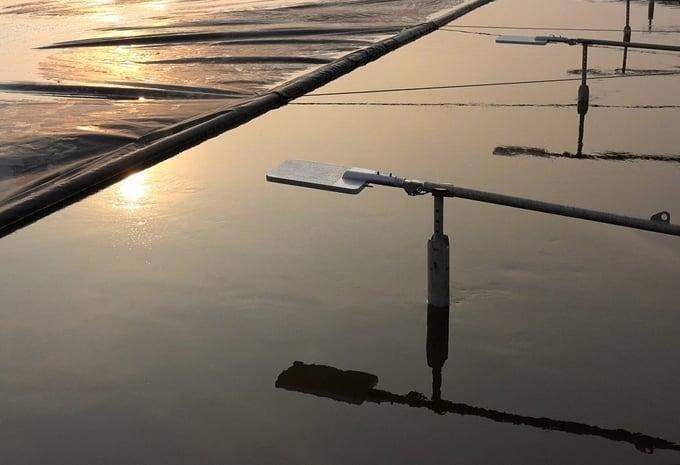
The LED lighting system is installed above the pond surface and switched on at night to stimulate shrimp feeding. Photo: Ho Thao.
To address these issues, Rynan Technologies Vietnam Company has applied a new shrimp farming method at its farm in Tra Vinh. The farming ponds are specially designed, with a funnel-shaped bottom and a unidirectional water flow system, which helps stratify the water current and allows waste to settle more quickly at the bottom.
“In the farming pond, there are organic wastes such as shrimp feces, leftover feed, shrimp shells, and dead shrimp. These wastes include both water-soluble components (16.7%) and insoluble components. We treat them by siphoning them to remove the insoluble portion. Thanks to the funnel-shaped pond bottom and the unidirectional water flow that enables waste to settle rapidly, it only takes a few minutes to open the valve and discharge the waste, thereby saving water and preventing disease,” Mr. My stated.
Mr. My further shared that during the daytime, shrimp tend to feed in groups. Due to their competitive feeding behavior, they select larger pellets and ignore smaller ones. Therefore, from midnight onward, he switches on green lights to stimulate shrimp to feed on seaweed and algae, helping them grow more rapidly.
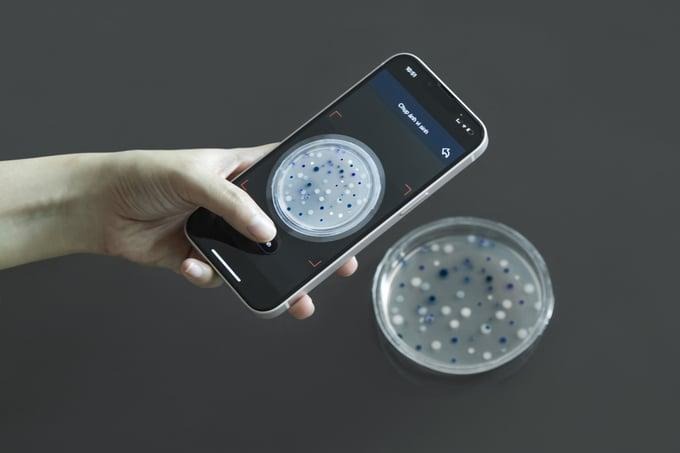
AI technology helps detect diseases early in farming ponds and control up to 90% of disease risks. Photo: Ho Thao.
To prevent disease outbreaks, Mr. My utilizes AI to automatically monitor shrimp size and health, assessing whether shrimp show signs of infection based on daily growth data. The artificial intelligence–based system enables farmers to control up to 90% of disease risks.
“In Vietnam, the average shrimp stocking density is 200 shrimp per square meter. However, with my technology, it can reach 400–500 shrimp per square meter while still saving energy and water. The siphon system helps limit disease, and if shrimp encounter any issues, the technology detects them immediately to minimize economic risks,” Mr. My stated.
Mr. My also expressed confidence that, with the proper application of techniques and science, the target of USD 8.4 billion in shrimp exports is achievable, and could even reach USD 15 billion in the near future.
Dr. Nguyen Thanh My does not agree with the view that the equipment investment costs are high and suitable only for super-wealthy. According to him, although the initial investment cost is relatively high, the system helps save energy, increase stocking density, and control up to 90% of disease risks, thereby increasing profits and aligning with collective economic models such as cooperatives.
Over 6,300 hectares of farmed shrimp applying technology
In Tra Vinh, high-tech shrimp farming models are currently being implemented in Cau Ngang District, Duyen Hai District, and Duyen Hai Town. The model has demonstrated positive results in terms of productivity, output, and economic efficiency, prompting an increasing number of farmers to invest in its development. The average stocking density ranges from 100 to 200 shrimp per square meter, with an average yield of approximately 45–60 tons per hectare per crop, an increase of 10–20 tons per hectare per crop compared to 2017. Previously, Mr. Le Van Tich, residing in Cai Gia Hamlet, Hiep My Dong Commune, Cau Ngang District, raised shrimp in earthen ponds. He encountered numerous challenges, including water pollution, unexpected disease outbreaks, and erratic weather conditions, resulting in unstable production outcomes each crop.
With the pond monitoring system, he can check the water environment in his shrimp ponds on an hourly basis. With just a touch on his phone screen, he receives parameters such as temperature, dissolved oxygen, and toxic gases in the pond, enabling strict control over factors such as water sources, feed, and stocking density. As a result, his shrimp output has tripled compared to traditional farming methods.
“High technology not only delivers higher output but also produces clean products that can be sold at higher prices than the market average, enabling me to earn at least VND 500 million in profit per crop,” Mr. Tich stated.
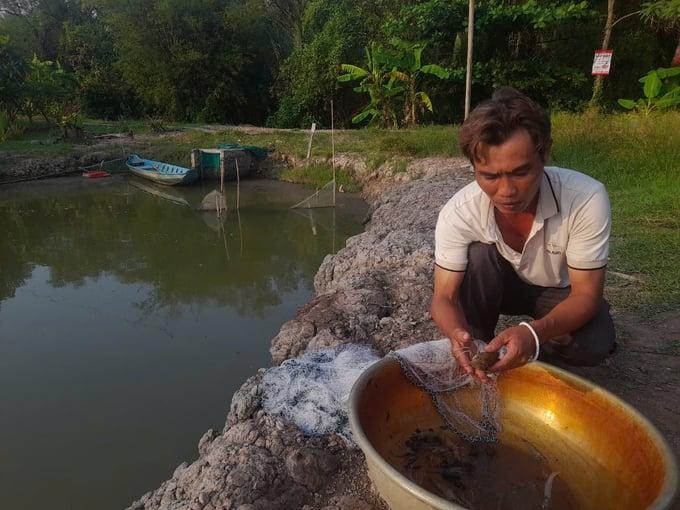
Tra Vinh Province encourages farmers to apply technology in shrimp farming, while also facilitating their access to credit. Photo: Ho Thao.
Mr. Nguyen Trung Hoang, Vice Chairman of the People’s Committee of Tra Vinh Province, stated that in order to minimize disease outbreaks in farmed shrimp and strengthen the application of technology in disease control, the province will intensify support for the issuance of aquaculture registration certificates, promote the adoption of Good Aquaculture Practices (VietGAP), and implement aquaculture certification standards.
Tra Vinh also encourages enterprises to invest in aquatic seed production in designated concentrated production zones, thereby fostering linkages and sharing of profits and risks between enterprises and farmers. At the same time, the province will promote the application of new technologies and scientific and technical advancements in the field of aquatic seed production, while facilitating shrimp farmers’ access to bank credit to develop high-tech shrimp farming models.
Source: https://nongnghiepmoitruong.vn/ung-dung-ai-kiem-soat-90-rui-ro-dich-benh-tren-tom-nuoi-d408707.html