Lao Động Newspaper respectfully excerpts the presentation of the Credit Department for Economic Sectors – State Bank of Vietnam delivered within the framework of the Workshop entitled “Unlocking Green Credit Flows,” jointly organized by Lao Dong Newspaper and the State Bank of Vietnam on 25 April 2025.
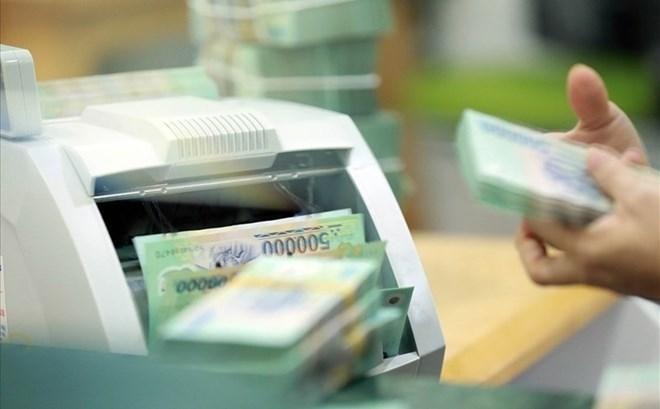
Unlocking green credit flows to promote sustainable economic development. Photo: Hải Nguyễn.
Green growth and sustainable development continue to be the prevailing development trends worldwide in the face of increasingly severe environmental pollution and climate change. Fully aware of the challenges and requirements posed to socio-economic development in the new context, the Party and the State have set forth viewpoints, orientations and objectives on environmental protection and the country’s sustainable development, in line with the nation’s development requirements and conditions in each period, as well as Viet Nam’s strong international commitments to sustainable development and the reduction of greenhouse gas emissions.
1. Objectives and Orientations for Green Growth of Viet Nam
As early as 2012, the Prime Minister promulgated the National Strategy on Green Growth for the period 2011–2020 with a vision to 2050 (the 2011–2020 Strategy), together with the Action Plan for this period. During the same period, Viet Nam also actively participated in the implementation of international commitments such as the 2030 Agenda for Sustainable Development adopted at the United Nations Summit (2015) and the Paris Agreement on climate change (2016).
Building upon and selectively inheriting the achievements of the 2011–2020 Strategy, the 13th National Congress of the Party identified environmental protection as a key task in the process of rapid and sustainable national development in the coming period. The 13th Congress reaffirmed the viewpoint that economic development must always be closely linked with environmental protection at every stage and in every development policy. The Documents of the 13th Congress also addressed environmental protection in a number of specific areas and contents, such as environmental protection in rural areas; encouraging private enterprises to participate in environmental protection and fulfill their corporate social responsibilities; and promoting education to raise awareness and a sense of responsibility for environmental protection.
The Party’s viewpoints and orientations, Viet Nam’s international commitments to reducing greenhouse gas emissions, and the achievements of the Fourth Industrial Revolution have been concretized into objectives, tasks and solutions in the National Strategy and National Action Plan on Green Growth for the period 2021–2030, with a vision to 2050. Accordingly, the Strategy orients green growth activities in the new period to contribute to restructuring the economy in association with renewing the growth model; achieving economic prosperity, environmental sustainability and social equity; and moving towards a green, carbon-neutral economy, contributing to limiting the increase in global temperature, based on four main objectives:
(i) Reducing greenhouse gas emission intensity per GDP;
(ii) Greening economic sectors;
(iii) Greening lifestyles and promoting sustainable consumption;
(iv) Greening the transition process on the principles of equality, inclusiveness and enhanced resilience.
Strong orientations toward the objective of restructuring the economy in association with renewing the green growth model focus on the economical and efficient exploitation and use of energy and resources based on science and technology, the application of digital technology and digital transformation, the development of green and sustainable infrastructure, the building of green lifestyles, and ensuring a green transition on the principles of equality, inclusiveness and enhanced resilience across the entire economy, alongside the formulation of development orientations for key sectors and fields.
In parallel, the Action Plan has provided an overall picture of resources, creating a foundation for their effective mobilization to achieve socio-economic development goals in harmony with environmental protection, greenhouse gas emission mitigation and enhanced climate change resilience. Notably, on 17 November 2020, the National Assembly adopted the Law on Environmental Protection, establishing a legal corridor for the implementation and promotion of economic instruments to realize green growth, such as green credit and green bonds, and laying the foundation for the formation and operation of the carbon market in Viet Nam.
2. Green Credit Solutions and Policies of the Banking Sector
In recent years, the mobilization of financial resources and investment for green growth has received close attention and direction from the Government and the Prime Minister, achieving many positive results. In addition to public investment capital, in the context where the green bond market and the carbon market are newly developed and in the process of formation, green credit capital from the banking system has played and continues to play an important role in promoting activities that generate environmental benefits, developing sustainable production models, and contributing to the transition toward a green and low-emission economy. Recognizing this, the banking sector has promptly and synchronously implemented policies and solutions to promote green credit activities. Specifically:
First, on the basis of closely adhering to the objectives set by the National Assembly, the direction of the Government and the Prime Minister, as well as domestic and international macroeconomic and monetary developments, the State Bank of Viet Nam has administered credit policy in a prudent and appropriate manner, meeting the credit capital needs of the economy to support economic growth, directing credit to priority sectors and key growth drivers in accordance with the Government’s policies, including supporting the economy’s transition to a green growth model.
Second, the State Bank of Viet Nam has developed the Banking Sector Action Plan to implement the National Strategy on Green Growth for the period 2021–2030 (Decision No. 1408/QĐ-NHNN dated 26 July 2023 of the Governor of the State Bank of Viet Nam), comprising seven groups of tasks and solutions covering all activities of the banking sector:
-
Improving credit mechanisms and policies in line with green growth objectives;
-
Enhancing international cooperation to promote the mobilization of resources for green growth;
-
Promoting digital transformation;
-
Training, capacity-building and human resource development to meet the requirements of the green transition;
-
Strengthening information and communication on banking sector activities contributing to the implementation of green growth;
-
Studying and establishing a common green finance forum of the banking sector;
-
Promoting the implementation of green procurement in public procurement activities.
Third, the State Bank of Viet Nam reviews, amends and refines legal regulations governing the credit extension activities of credit institutions (CIs) to customers in order to ensure consistency, coherence and alignment with the trend of green growth and sustainable development:
-
Promulgating guidelines on credit extension activities of CIs and foreign bank branches to customers in accordance with the Law on Credit Institutions (2024), including lending activities, letters of credit operations, factoring and financial leasing activities; notably, supplementing new provisions on lending through electronic means, thereby creating favorable conditions for enterprises and citizens in general in undertaking green production and sustainable consumption;
-
Promulgating Circular No. 17/2022/TT-NHNN guiding CIs in implementing environmental risk management in credit extension activities in accordance with the Law on Environmental Protection (2020).
Fourth, supplementing provisions on tasks and solutions relating to green credit and green banking in order to promote credit flows financing environmentally friendly projects; foster green production, services and consumption sectors, clean energy and renewable energy; and contribute to the promotion of green growth and sustainable development as set out in the Scheme on the Development of Green Banking in Viet Nam; and promptly updating and supplementing tasks and solutions for the implementation of the Scheme in the new context (Decision No. 1604/QĐ-NHNN dated 7 August 2018 and Decision No. 1663/QĐ-NHNN dated 6 August 2024), in the Banking Sector Development Strategy to 2025 (Decision No. 986/QĐ-TTg dated 8 August 2018) and in the Scheme on Restructuring the System of Credit Institutions associated with bad debt settlement for the period 2021–2025 (Decision No. 689/QĐ-TTg dated 8 June 2022 of the Prime Minister). At the same time, the State Bank of Viet Nam sets forth the requirement to study and promulgate preferential policies and support mechanisms to encourage credit institutions to promote green credit, green banking and low-carbon production and consumption sectors.
Fifth, to concretize the orientations and objectives for the development of green credit, the State Bank of Viet Nam has issued directives requesting credit institutions to strengthen lending for environmentally friendly projects and business plans, and to manage environmental and social risks (Directive No. 03/CT-NHNN dated 24 March 2015); and has issued guidance documents for credit institutions on identifying and compiling statistics on credit extension activities for 12 green sectors, serving as a basis for credit institutions to implement green credit activities in the absence of a common green taxonomy for economic activities.
Sixth, the State Bank of Viet Nam directs credit institutions to actively implement credit policies concentrating capital on green sectors and fields, agricultural production under value chain linkage models, the application of high technology, and policy credit programs supporting housing for the poor in response to climate change, among others. In particular, in 2024, the State Bank of Viet Nam coordinated with the Ministry of Agriculture and Rural Development and 13 provinces in the Mekong Delta to direct credit institutions to implement the Scheme on “Sustainable Development of One Million Hectares of High-Quality, Low-Emission Specialized Rice Cultivation Associated with Green Growth in the Mekong Delta Region to 2030” under Decision No. 1490/QĐ-TTg dated 27 November 2024 of the Prime Minister.
In addition, the State Bank of Viet Nam actively participates as a member in numerous international financial forums to learn from experience, mobilize resources and enhance capacity in promoting green credit and green banking activities in support of green growth and sustainable development objectives. At the same time, based on Viet Nam’s practical implementation experience, it has also contributed various initiatives on green banking, thereby gradually enhancing Viet Nam’s position in international monetary and banking forums and organizations, serving the development of the banking sector in line with the requirements of international integration.
3. Achieved Results
The legal framework for green credit extension activities and green banking practices has been progressively improved, ranging from general regulations on credit extension to detailed guidance on environmental risk management in credit activities, in line with legal provisions and the operational practices of credit institutions (CIs), thereby enhancing access to bank credit for individuals and enterprises to serve production and business activities, including projects and business plans that generate environmental benefits and contribute to environmental protection.Credit institutions have actively implemented tasks and solutions to achieve green credit and green banking objectives in a relatively comprehensive manner, complying with regulations of the State Bank of Viet Nam and environmental laws, and gradually approaching international standards. CIs have proactively issued and integrated green growth implementation contents into their business development strategies and plans; diversified resources (such as green deposit products, issuance of green bonds, and access to funding from international funds and financial institutions) for green growth alongside traditional mobilized capital; proactively researched and developed green credit products, modern products and services, and new payment instruments; established systems and implemented environmental and social risk management in credit extension activities; and strengthened training to enhance the capacity of banking staff on ESG issues, green finance, green banking and sustainable development.
As of 31 December 2024, outstanding credit serving environmental protection objectives exceeded VND 4.28 quadrillion, accounting for over 27.4% of total outstanding credit of the entire economy. Outstanding credit for green sectors within the banking system has experienced rapid growth in terms of the number of participating CIs, scale and growth rate. From only 15 CIs engaging in green lending in 2017 with outstanding green credit of merely VND 180 trillion, as of 31 December 2024, 48 CIs were providing such lending with outstanding green credit reaching nearly VND 680 trillion, up 9.5% compared to the end of 2023, primarily concentrated in renewable energy and clean energy sectors (accounting for more than 41%) and green agriculture (over 29%). The average annual growth rate of outstanding green credit reached over 21.2% during the 2017–2024 period, higher than the overall credit growth rate of the economy. Outstanding loans assessed for environmental and social risks reached VND 3.6 quadrillion, up more than 26% compared to the end of 2023.
4. Difficulties and Challenges
Despite the positive results achieved, banking sector activities in support of green growth and climate change response continue to face several challenges, as follows:
-
The national green taxonomy and the green economic sector classification system, including qualitative and quantitative environmental criteria, have not yet been promulgated as a basis for identifying and classifying economic activities. This creates difficulties for the banking system in implementation and in comprehensively monitoring and reporting credit resources for green growth and environmental protection objectives.
-
Institutional frameworks and policies to support investment in green growth have not been issued in a synchronized manner, particularly policies to promote the green bond market and carbon market, which are essential to creating a favorable environment for mobilizing, attracting, and channeling resources for green growth. There is also a lack of policy mechanisms to support green transition (including taxes, fees, capital, technology, markets, planning, and development strategies) across sectors and fields, limiting the effective mobilization and utilization of green credit and green bonds.
-
Mobilizing investment capital for green projects and sectors remains challenging:
(i) Access to international funding faces obstacles due to global economic and geopolitical uncertainties affecting capital inflows; USD lending rates have remained high, and exchange rate risks persist; (ii) Domestic funding sources are constrained by maturity mismatches between credit institutions’ funding structures and the long payback periods of green projects. -
Awareness among enterprises and investors regarding the benefits and importance of green finance markets remains uneven, resulting in limited interest in green financial products and services, as well as hesitation in adopting new banking products and services.
-
Information systems on clients’ compliance with environmental protection requirements remain limited and are difficult for credit institutions to access, leading to challenges in collecting, processing, and utilizing data for environmental risk assessment, as well as for auditing and supervisory purposes.
-
Investment in green projects requires substantial capital and specialized technical appraisal capacity in environmental fields. Consequently, credit institutions incur additional costs to develop governance systems aligned with green growth and economic transition objectives, and to enhance staff capacity in green banking and sustainable finance.
5. Policy Orientations of the Banking Sector’s Credit for Green Growth Objectives
In the coming period, on the basis of closely adhering to the socio-economic development objectives, the National Strategy on Green Growth and the tasks assigned under the Schemes, Strategies and Action Plans on green growth and climate change response, as well as the Directive of the Prime Minister on promoting the implementation of the National Strategy on Green Growth, the State Bank of Viet Nam will continue to implement the groups of tasks and solutions set out in the Banking Sector Action Plan for the implementation of the National Strategy on Green Growth for the period 2021–2030 and the Scheme on tasks and solutions to implement the outcomes of the 26th Conference of the Parties to the United Nations Framework Convention on Climate Change. The focus will be placed on the following key solutions:
-
To continue administering monetary policy in a proactive, flexible, timely and effective manner, ensuring close, synchronous and harmonious coordination with fiscal policy and other macroeconomic policies, thereby contributing to the promotion of economic growth, macroeconomic stability and inflation control;
-
To continue reviewing and refining the legal framework on green credit and green banking; to support credit institutions in implementing environmental and social risk management policies; and to strengthen the mobilization of international resources to finance green projects, including proposing amendments and supplements to preferential credit mechanisms and policies to encourage the development of high-tech agriculture, organic agriculture and agriculture based on circular economy models.
-
To provide guidance to credit institutions on extending credit to projects generating environmental benefits and contributing to environmental protection after the National Green Taxonomy is promulgated.
-
To proactively negotiate and seek funding sources from domestic and international organizations in order to obtain financial and technical assistance for the implementation of green finance and green banking activities, particularly to enhance the capacity of banking staff in green banking and green credit as well as climate change issues.
-
To intensify information and communication efforts within the banking sector to raise awareness and understanding among banking staff and customers regarding green growth, sustainable production and sustainable consumption.
6. Proposals and Recommendations
Based on the aforementioned practical requirements, in order to expand, unlock and effectively utilize green credit capital of the banking system, it is necessary to ensure coordination and collaboration among ministries, sectors and competent authorities in perfecting the legal framework, support mechanisms and creating incentives to mobilize all resources from various economic sectors, specifically:
-
To comprehensively improve investment mechanisms and policies in order to establish a favorable investment environment; to develop a roadmap for the implementation of policy mechanisms supporting green sectors (including taxes, fees, capital, technology, markets, as well as planning and development strategies, etc.) in a synchronized manner for each sector and field, thereby attracting and effectively utilizing green credit capital.
-
To promptly promulgate the National Green Taxonomy; to complete the legal framework for green financial instruments such as green bonds and the development of an emissions trading market; and to refine tax instruments applicable to carbon-emitting activities.
-
To develop and implement solutions to support credit institutions in accessing and mobilizing financial resources from international financial institutions, funds and private investors, as well as financial funds, thereby enabling the provision of long-term credit with preferential interest rates for green sectors and fields.
Department of Credit for Economic Sectors – State Bank of Vietnam
Friday, 25 April 2025, 18:09 (GMT+7)